


Article: Perimenopause Rage Is Real: The Cortisol Loop That Explains It

Perimenopause Rage Is Real: The Cortisol Loop That Explains It
Picture this. Your husband chews. Your kid drops a fork. The dog breathes. And suddenly you're not annoyed. You're enraged. Disproportionately, irrationally, weather-front enraged. And you can't tell where it came from.
If you've found yourself shaking with fury at a loading screen, screaming into your car at a red light that took too long, or fantasizing about throwing your phone into a lake because someone replied "k," this is perimenopause rage. It has a name. It has a mechanism. And it's not who you are.
It's also not your husband's fault. Mostly.
What's Actually Happening
Perimenopause is the transition phase before menopause. It usually starts in the early-to-mid 40s, but it can begin as early as 35 or as late as 55.
During this stretch, which can last anywhere from 2 to 10 years, your hormones aren't just declining. They're erratic. Wildly, week-to-week, sometimes day-to-day erratic.
Most women don't realize they're in perimenopause until they're almost out of it. By the time they have the vocabulary, they're already in menopause and looking back at five years of mystery symptoms.
The reason isn't that the symptoms are subtle. The reason is that most doctors aren't trained to flag perimenopause, even when a 43-year-old shows up with sleep disruption, mood swings, and irregular cycles.
That's a different post. For now: if you're in your late 30s or 40s and something feels off, perimenopause is worth ruling in, not ruling out.
The two hormones doing the most damage to your patience are estrogen and progesterone.
Estrogen is your built-in mood regulator. It boosts serotonin (the feel-good chemical), keeps cortisol in check, and helps the brain regulate emotional response. When estrogen drops, even temporarily, all three of those systems get destabilized.
Progesterone is your built-in chill pill. It works on GABA receptors in your brain, which are the same receptors that respond to anti-anxiety medications and alcohol. When progesterone drops, that calming effect disappears. Things that used to feel manageable now feel like attacks.
Now here's where it gets interesting. Both estrogen and progesterone start dropping in perimenopause, but they don't drop at the same rate.
Progesterone usually drops first and faster. Estrogen drops too, but it also spikes unpredictably, leaving your nervous system trying to figure out what time zone you're in.
That's the biological setup for perimenopause rage. You're not losing it. You're decoding a body that's running on different chemistry than it did six months ago.
The Cortisol-Rage Loop
Here's the part nobody tells you.
When estrogen drops, your cortisol response goes haywire. Cortisol is your stress hormone. In a healthy system, cortisol rises to help you handle a stressor, then falls back down when the stressor passes.
Estrogen helps regulate that fall. Without enough estrogen, your cortisol stays elevated longer, climbs higher, and gets triggered by smaller and smaller things.
Add poor sleep (also perimenopausal, also estrogen-related), and your cortisol baseline starts the day already elevated. By the time something genuinely irritating happens at 4pm, you're not starting from a calm baseline. You're starting from an already-cooked nervous system.
This is the cortisol-rage loop. High cortisol creates more emotional reactivity. Emotional reactivity creates more cortisol. Repeat. Sleep less. Drink wine to take the edge off (which spikes cortisol the next day). Wake at 3am. Repeat.
Clinicians like Dr. Mary Claire Haven have made this pattern visible to a generation of women who were told they were just stressed.
The reason perimenopause anger feels different from regular anger is because it is. You're not having a normal emotional response to a normal stressor. You're having a chemically amplified response to an ordinary stressor, by a nervous system that's been running on elevated cortisol since long before you noticed anything was off.
That's why it feels sudden. It isn't. You just reached the tipping point of no denial.
A Quick Word on Alcohol
I spent 39 years buffering feelings with alcohol. Some of those feelings, in hindsight, were partly hormonal. It didn't help. The biology of why is wild.
Alcohol spikes cortisol. It fragments deep sleep, which raises cortisol the next day. It depletes magnesium, which your body needs to manage stress.
And as estrogen drops, your liver processes alcohol slower, so the same two glasses that used to feel fine now leave you foggy, irritable, and shorter-fused for 36 hours.
If perimenopause anger is hitting hard and your evening routine includes a glass of wine, that's not coincidence. That's chemistry stacking.
I'm not telling you to stop drinking. I'm telling you that if you want to know whether alcohol is part of the loop for you, the easiest test is to skip it for ten days and see what shifts.
What Actually Helps
This is the part where most articles tell you to "manage your stress." That's not advice. That's a sentence pretending to be advice.
Here's what's actually backed by hormone research and what's worked for me.
Address the cortisol baseline first, not the rage moment.
You can't talk yourself out of a cortisol surge in real time. But you can lower your baseline so the surges happen less often and don't climb as high. That means the work happens in your evenings and your mornings, not in the moment when you're screaming at the dishwasher.
Build a real evening wind-down.
Not a "pamper yourself" routine. A nervous-system regulation routine. The goal is to get cortisol down before bed so it can do its natural overnight cycle and wake you with energy instead of dread.
What works:
-
Stop scrolling 60 to 90 minutes before sleep. Blue light is the lazy answer; the real issue is that your brain registers social media and email as threat input. Threat input keeps cortisol up.
-
Magnesium glycinate, 200 to 400mg, about an hour before bed. Different from magnesium citrate (laxative) or oxide (also laxative, also useless for nervous system support). Glycinate is the one for stress and sleep.
-
Cold or warm, not lukewarm. A hot bath or a cold rinse signals to your nervous system that something is happening and the day is closing. Lukewarm signals nothing.
-
One slow, boring activity. Reading a paper book. Knitting. A jigsaw puzzle. A crossword. The point is to give your brain a single channel to focus on so the background hum of cortisol can quiet.
Move your body in the morning, not the evening.
Cortisol wants to peak in the morning. Hard exercise in the evening can spike it when you're trying to wind down. Walk in the morning sun for 10 minutes if you can. It does more for your hormone profile than most supplements.
Eat protein with breakfast.
Skipping breakfast keeps cortisol elevated longer than it should be. Eating only carbs spikes your blood sugar, then crashes it by 11am, which your body reads as a threat. 30g of protein in the morning is a boring, unsexy hormone hack that works.
Track the rage, briefly.
For two weeks, when you have a rage moment, write down the time, the trigger, and what you ate and slept the night before. You'll see patterns you didn't expect. For some women, it's lunch. For some, it's a specific day in the cycle. For some, it's the third night of bad sleep in a row. Your data is more useful than my data.
Consider what's in your evening ritual.
This is where I'll mention what I actually do. After the second glass of wine started costing me a full next day, I built an evening ritual that wasn't centered on alcohol.
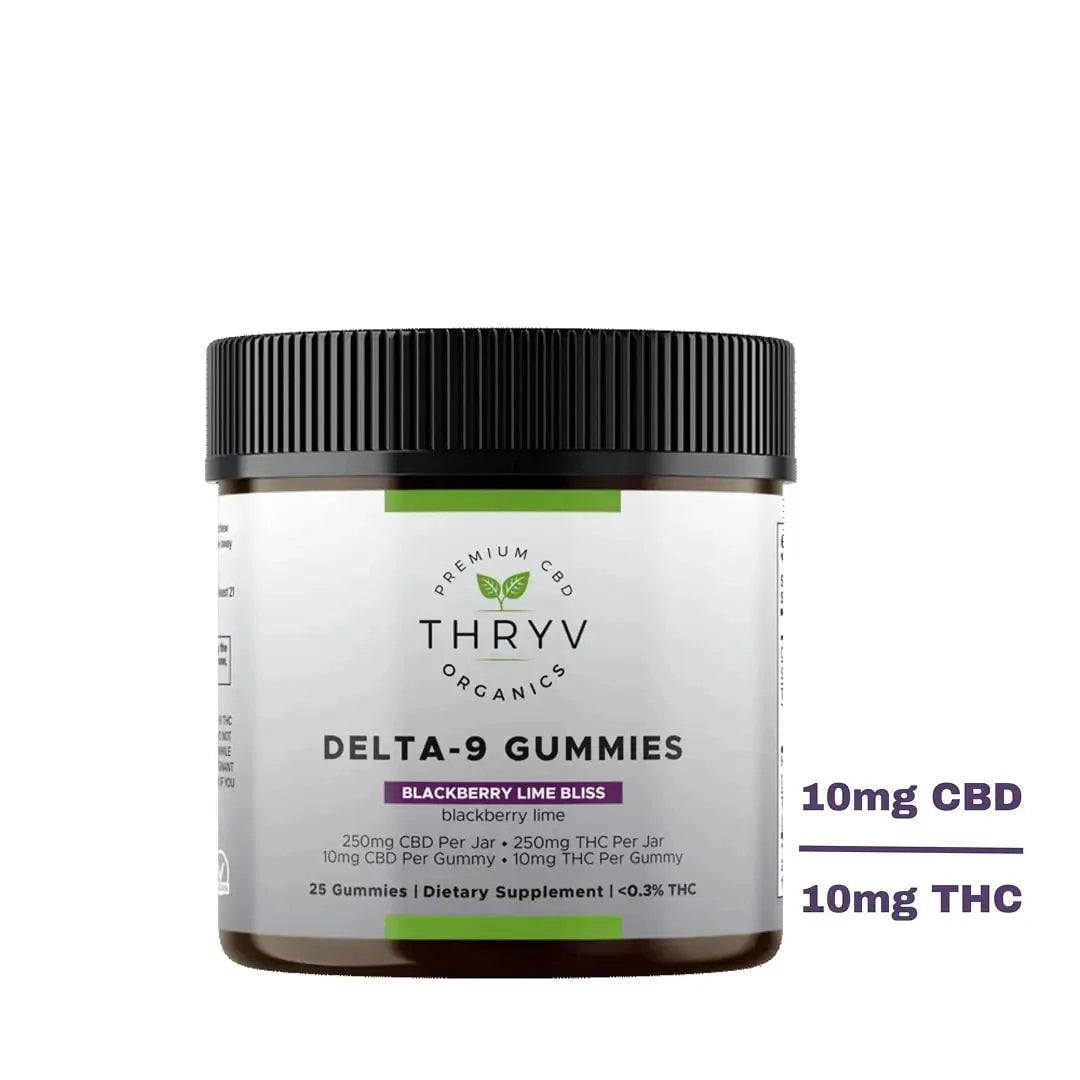
Thryv Organics Delta-9 THC Gummies are part of mine. They don't fix perimenopause. Nothing does. But they're a piece of what I do most evenings before bed, alongside the magnesium glycinate, the boring book, and the dimmed lights.
What This Post Won't Tell You
I won't tell you that you can hack your way out of perimenopause rage. The hormone shifts are real. The duration is years. The most you can do is lower the baseline, recognize the loop, and refuse to interpret your own rage as evidence that you're a jerk.
I also won't discourage you from to talking to your doctor. Hormone replacement therapy (HRT) is dramatically safer than the 2002 Women's Health Initiative made it sound, and a lot of women in perimenopause feel substantially better with it. (The Menopause Society's 2022 position statement on hormone therapy is the most authoritative source on this if you want to bring something to your doctor.)
If you've been suffering and haven't asked, ask.
What I will tell you is this. The rage is biology. It has a mechanism. The mechanism has known regulators. You're operating a body that's running on different chemistry than it used to. That's a problem with answers.
The first answer is to stop interpreting your perimenopause rage as personal failure.
The second is to look at your evening, your morning, your sleep, and your alcohol, in that order.
The third is to give yourself the data and the time to figure out what works for your particular chemistry.
You won't fix this in a week. You can lower the baseline in a month.
Disclaimer: This article is for informational purposes only and should not be considered medical advice. Perimenopause symptoms vary widely among individuals. Please consult with a qualified healthcare provider or gynecologist before making changes to your health routine, starting supplements, or considering hormone replacement therapy. If you are experiencing severe mood changes, rage, or other concerning symptoms, seek professional medical guidance.
These statements have not been evaluated by the Food and Drug Administration. This product is not intended to diagnose, treat, cure, or prevent any disease. Hemp-derived Delta-9 THC products contain less than 0.3% Δ9-THC by dry weight, in compliance with the 2018 Farm Bill. For adults 21 and older.

Written by Stacie Czech


Leave a comment
This site is protected by hCaptcha and the hCaptcha Privacy Policy and Terms of Service apply.